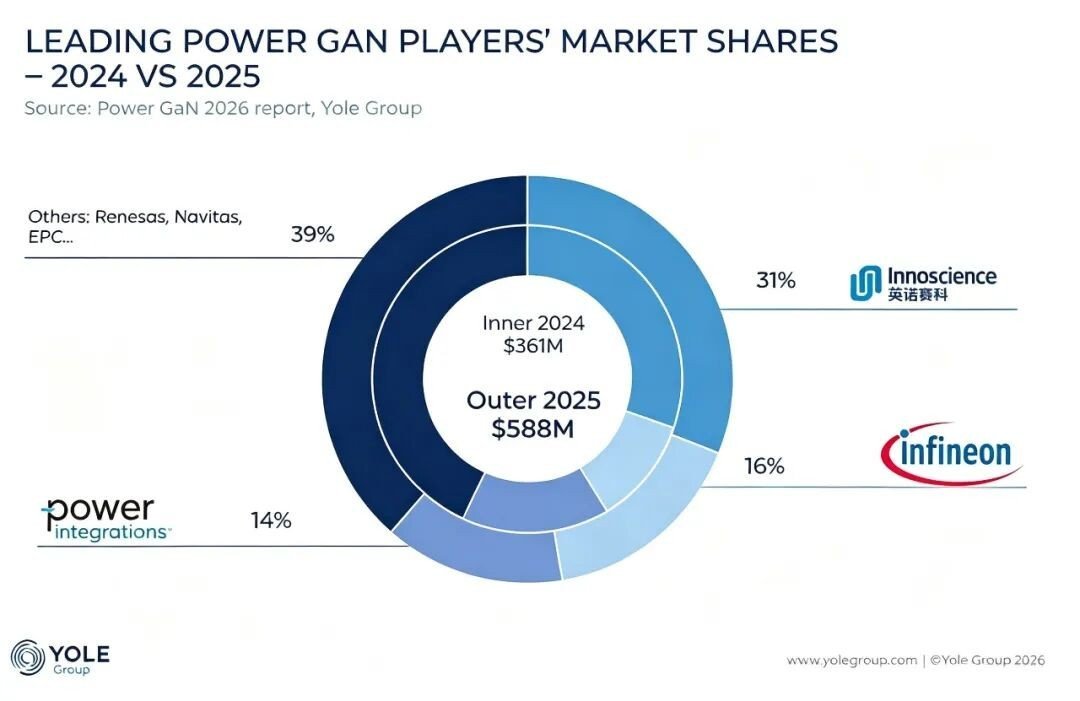
In addition, ON Semiconductor is also an important newcomer. In December 2025, the company announced a partnership with GlobalFoundries to develop 650V devices based on a 200mm silicon-based GaN platform; in the same year, it also announced a partnership with Innoscience to explore the use of its 200mm GaN-on-Si wafer manufacturing capabilities.
In terms of manufacturing layout, the industry has not concentrated on a single leading foundry. Instead, it has shown a trend of decentralized development. The exit of TSMC has accelerated the diversification process of foundries. Companies such as GlobalFoundries, X-FAB, World Advanced (VIS), PSMC, Samsung, DB HiTek, and SK Keyfoundry are actively expanding their gallium nitride manufacturing capabilities.
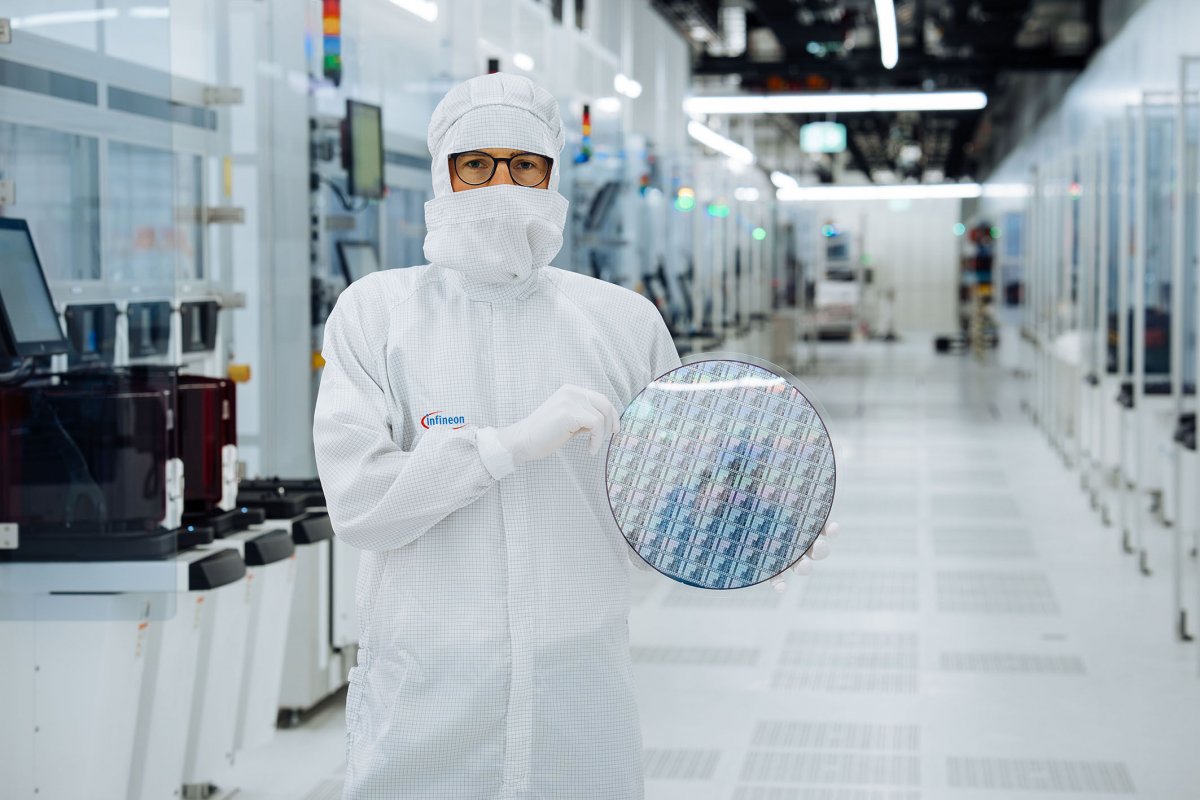
Infineon's decision to build its own production plant instead of relying on outsourcing reflects its differentiated strategy in the gallium nitride technology route - by controlling the entire chain from process development to mass production, it establishes a competitive barrier.
European chip autonomy, driven by policy-driven industrial investment
It is worth noting that this project has received policy support under the framework of the EU's "European Chips Act". The European Commission has approved the Austrian government to provide a maximum of 319 million euros in financial assistance for this project. This means that Infineon's actual capital expenditure pressure will be somewhat alleviated, and it also reflects the strategic intention of the EU to leverage public funds to enhance the domestic semiconductor manufacturing capacity.
Austrian Federal Chancellor Christian Stocker called this investment "one of the largest single investments in Austria's high-tech industry in history". Austrian Minister of Economic Affairs Wolfgang Hattmannsdorfer stated straightforwardly, "The importance of chips for the future economy is like that of oil for the past economy. We hope to consolidate this leading advantage through industrial strategies, not only by developing new technologies, but also by promoting the realization of these technologies in large-scale industrial production."
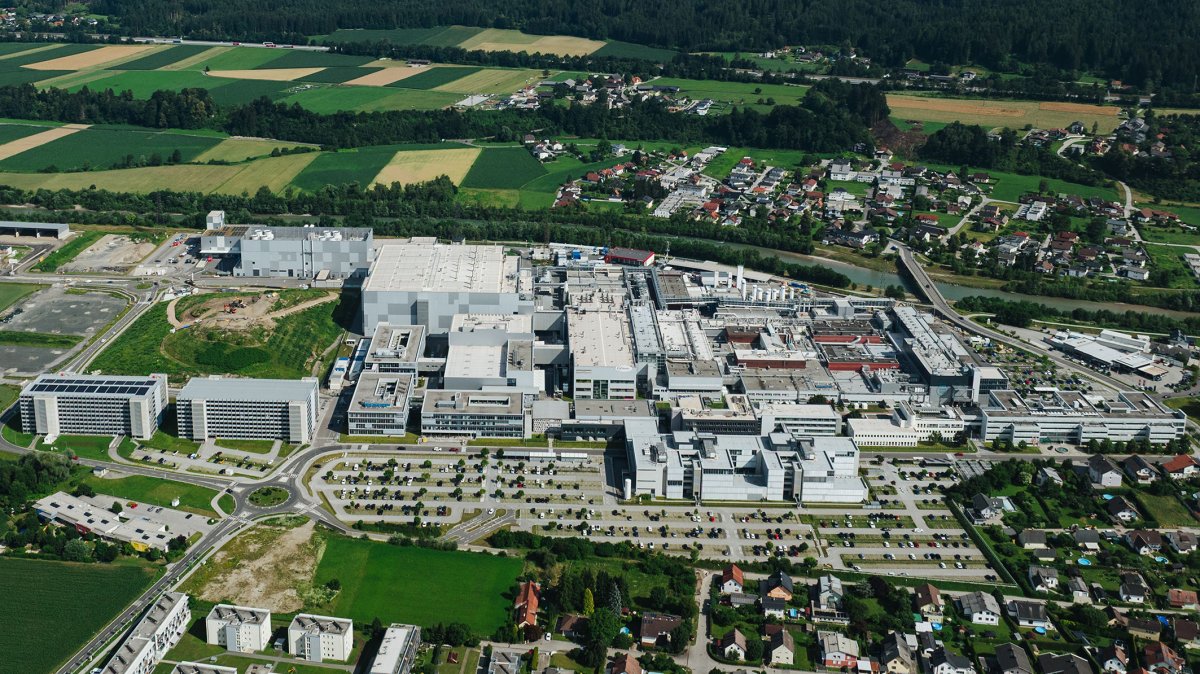
From an industrial geography perspective, Fehlach is not a traditional semiconductor heavy town. The Austrian Infineon company currently has approximately 5,800 employees, of whom about 4,800 are located at the Fehlach base. This base has long focused on the research and development of power devices and small-scale batch production. The introduction of the 300mm gallium nitride production line will significantly enhance the strategic position of this base in the global Infineon production capacity map.
The "catch-up" battle in European semiconductor manufacturing
Although Europe has accumulated profound experience in chip design (such as Infineon, stmicroelectronics, and NXP) and EDA tools, it has long relied on external foundries or has limited its own production capacity in the wafer manufacturing process.
Infineon's construction of a gallium nitride production base in Europe this time is not only based on commercial considerations such as supply chain security and customer proximity services, but also reflects the reality that the European semiconductor industry is accelerating its catch-up under policy-driven circumstances. Compared with the US "Chips and Science Act" and the huge subsidies from the governments of South Korea and Japan for advanced processes, the funds leveraged by Europe through the "Chips Act" are still relatively limited. However, in the power semiconductor sub-sector, Europe is expected to establish differentiated competitive advantages by leveraging technology leaders such as Infineon.
Of course, challenges cannot be ignored either. From the announcement of the project to the completion of production by the end of 2027, the time window is only about one year. Considering the complex stages such as wafer plant construction, equipment debugging, process verification, and customer certification, this time schedule is quite challenging. In addition, the improvement of yield in the gallium nitride production process, the local supply chain integration, and the reserve of skilled process engineers are all difficult problems that need to be overcome one by one.